After our stay in
Phnom Penh we climbed on a bus and headed north up to
Siem Reap.
Siem Reap is a small town in the north very close to Thailand, and is the jumping off point to visit the
ancient Khmer temples, like Angkor Wat. It is a cute little tourist town full of delicious restaurants, guesthouses, and very cheap beer. The tour company that booked our bus gave us a free
tuk tuk ride from the bus stop to our hotel, which was pretty much giving our driver the opportunity to have the first crack at getting our business as a driver for the temples. We accepted, and Ra became our
tour guide for the next three days carting us from temple to temple and offering small
tid bits or history in broken English.

Our guest house was this cozy little place with a garden and hammocks out front. I fell in
loooove with hammocks on this trip and even decided to buy one at the market. It is was the very last thing I need to be carting around in my pack, but I couldn't resist the heavenly comfort.

The first night we went to a restaurant called the dead fish cafe. It used to be a crocodile farm, and they still have two of their animals remaining for entertainment. You can pay 50cents and feed them. An interesting thing about Cambodia is that all prices are listed in dollars. Even
ATMs feed you dollars. They have
their own currency but it is so weak that it is never used. If you bought something that was under a dollar the change would be in
Riel, but that was the only time I ever had any cash.

Weed is not technically legal in Cambodia, but there are these 'happy' pizza parlors all over the place.

The first day we went to see Angkor Wat at sunrise. I wasn't a big fan of waking up so early, but it was definitely worth seeing it. I took about 5 million pictures of all the different temples, but here are just a few of my favorite shots. They are so huge and impressive that it would be impossible for me to show in just a few pictures. Unfortunately a lot of the carvings were destroyed by the Khmer Rouge during the war. A lot of the fighters stationed themselves in these temples as a kind of fort. At one point we went up to this river that had carvings along the bank and was a bit far away from town. Ra told us that until a few years ago it was closed to tourists because there were still a few Khmer strongholds in this area.


A few of the temples were kind of taken over by the jungle around them. There were a lot of giant trees growing up from the middle of the rocks.


At every temple there was a group of really cute kids trying to sell you bracelets, scarves, drinks, postcards, weird musical instruments, or really anything they could find. Both me and Pam were suckers for them and I ended up with way too many bracelets.

In both Cambodia and Vietnam I was really impressed with the things that people managed to carry on their bikes and motor bikes. In Vietnam we watched a guy load 3 full arm chairs and drive away. I don't know how this guy balanced or made turns.

Our absolute favorite food was banana pancakes. I could eat them for every single meal.

This is amok, a kind of curry that often comes in banana leaves.

For our night out on the town we went to a bar called Angkor What? where you can sign the walls. We ended up making some friends and returned for a sequel.


Fish massage came with a free beer!

 Our guest house was this cozy little place with a garden and hammocks out front. I fell in loooove with hammocks on this trip and even decided to buy one at the market. It is was the very last thing I need to be carting around in my pack, but I couldn't resist the heavenly comfort.
 The first night we went to a restaurant called the dead fish cafe. It used to be a crocodile farm, and they still have two of their animals remaining for entertainment. You can pay 50cents and feed them. An interesting thing about Cambodia is that all prices are listed in dollars. Even ATMs feed you dollars. They have their own currency but it is so weak that it is never used. If you bought something that was under a dollar the change would be in Riel, but that was the only time I ever had any cash.
 Weed is not technically legal in Cambodia, but there are these 'happy' pizza parlors all over the place.
 The first day we went to see Angkor Wat at sunrise. I wasn't a big fan of waking up so early, but it was definitely worth seeing it. I took about 5 million pictures of all the different temples, but here are just a few of my favorite shots. They are so huge and impressive that it would be impossible for me to show in just a few pictures. Unfortunately a lot of the carvings were destroyed by the Khmer Rouge during the war. A lot of the fighters stationed themselves in these temples as a kind of fort. At one point we went up to this river that had carvings along the bank and was a bit far away from town. Ra told us that until a few years ago it was closed to tourists because there were still a few Khmer strongholds in this area.
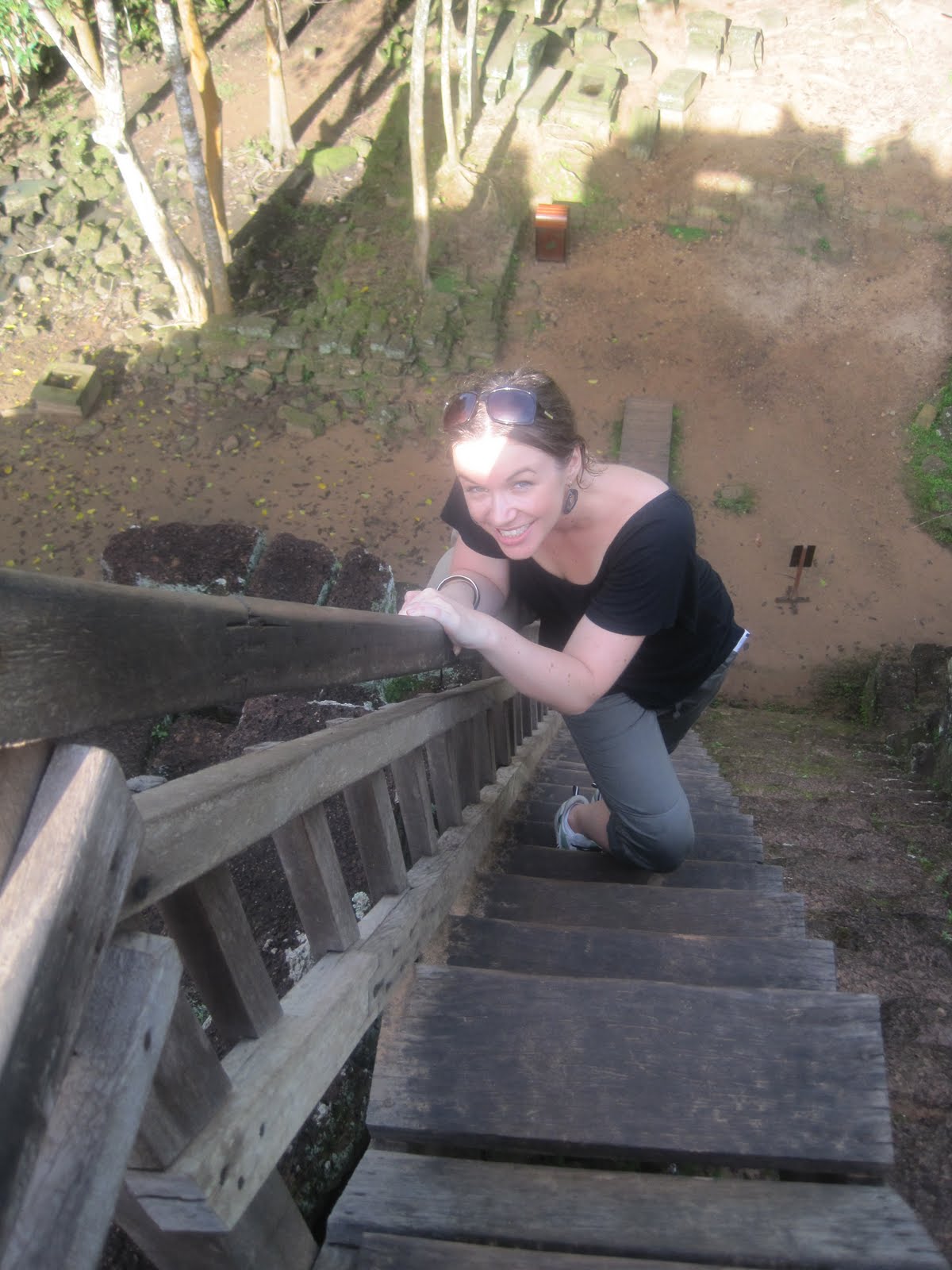
 Some of the stairs up to the top of the temples were VERY steep. There was one set that Ra warned us was a little rocky. The steps were about 2 feet tall and maybe 6 inches deep and were not in the best condition. Going up was fine, but I was terrified to peer down. When you walked up to them from the top it just looked like a sheer drop until you were right next to it.


 A few of the temples were kind of taken over by the jungle around them. There were a lot of giant trees growing up from the middle of the rocks.
 At every temple there was a group of really cute kids trying to sell you bracelets, scarves, drinks, postcards, weird musical instruments, or really anything they could find. Both me and Pam were suckers for them and I ended up with way too many bracelets.
 In both Cambodia and Vietnam I was really impressed with the things that people managed to carry on their bikes and motor bikes. In Vietnam we watched a guy load 3 full arm chairs and drive away. I don't know how this guy balanced or made turns.
 Our absolute favorite food was banana pancakes. I could eat them for every single meal.
 This is amok, a kind of curry that often comes in banana leaves.
 For our night out on the town we went to a bar called Angkor What? where you can sign the walls. We ended up making some friends and returned for a sequel.
 Fish massage came with a free beer!